How border town libraries became cooling centers during record heat waves
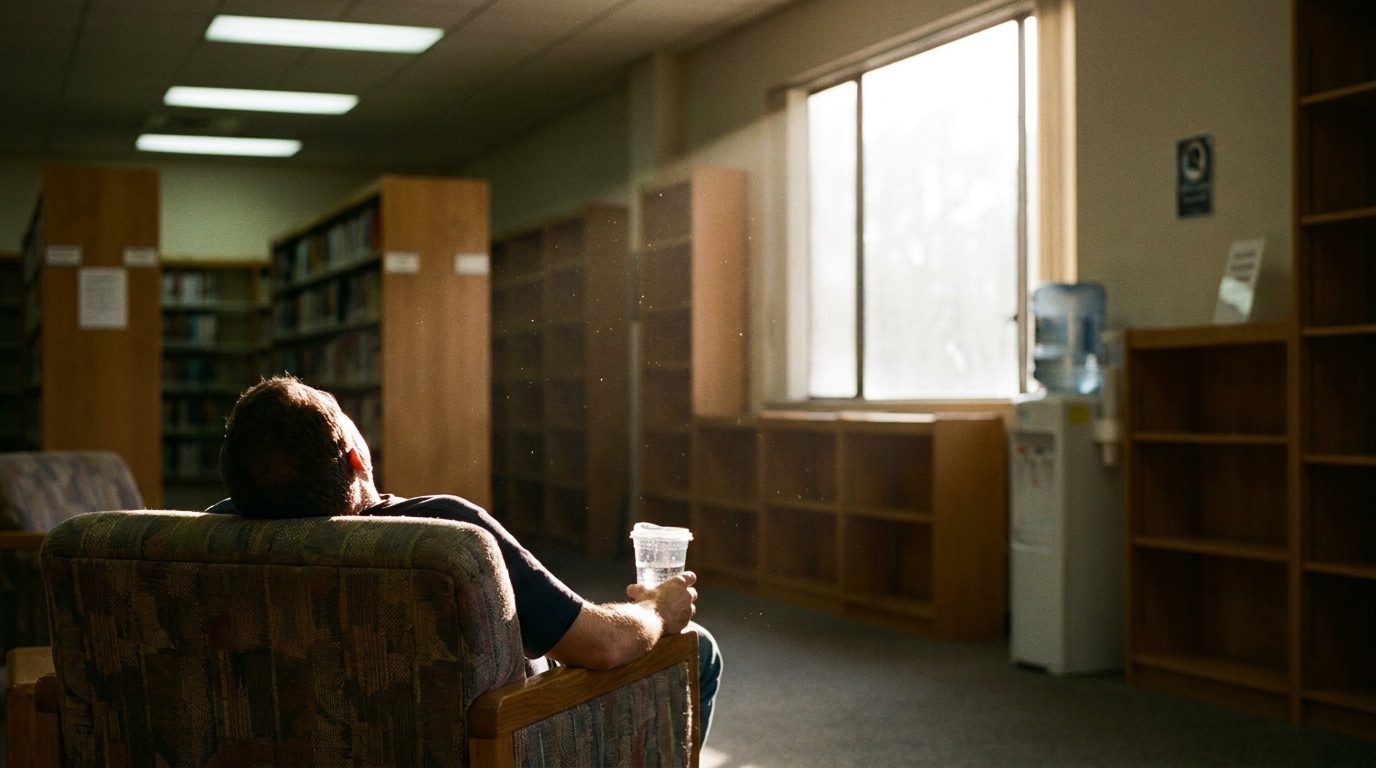
The library did not volunteer for this. It has air conditioning, it is free, and it does not ask you why you came in, and those three facts made it the default.
In several small towns in this part of Arizona, the public library is the cooling centre because there is no other building that meets the description.
What a cooling centre actually is
A public building, air conditioned, open during the hottest part of the day, where anyone can sit.
That is the whole specification. Some are formally designated by a county, appear on a list, and receive water and some funding. Many are informal, which means a library or a community centre simply keeps the doors open and absorbs the cost.
The formal ones are better, because the designation usually brings supplies and a relationship with emergency services.
Who comes in
People without air conditioning, or with air conditioning they cannot afford to run. That second group is larger than the first and it is the one that grows in a long heat wave, because the electricity bill arrives afterwards.
Older residents, disproportionately, and people with medical conditions that heat makes dangerous.
Outdoor workers on a break.
People who are homeless, who in a small town are usually a handful of individuals the staff know by name.
And, in border communities, people who have recently arrived and have nowhere to go during the day.
What it asks of library staff
This is the part I want to be direct about, because it does not appear in any county plan.
A librarian in a town of two thousand becomes, during a heat wave, a de facto social worker, first aid provider, and crisis contact, without training for any of it and without additional pay.
They notice when somebody is not right. They call for an ambulance. They deal with conflict between patrons who are stressed and uncomfortable. They keep water going.
Several of the people I spoke to described the July and August period as the hardest part of their working year, and one said plainly that it was not what she was hired for and that she would do it anyway.
The practical constraints
Hours. A library open until five is not a cooling centre in the evening, and heat in the evening kills people. Extending hours requires staff and staff require money.
Weekends. Many small libraries close Saturday afternoon and all day Sunday, which are days as hot as any other.
The building. Small municipal buildings in old structures have air conditioning sized for normal occupancy, and a room full of people on the hottest day of the year is not normal occupancy. Systems fail, and they fail when they are needed.
Water and supplies, which come out of a budget that was not written with this in mind.
What helps
Designation, formally, by the county, so that the library appears on the published list and receives support rather than absorbing it.
A relationship with emergency services, so that staff know who to call and are not making a judgement alone.
Basic training. Heat illness recognition, when to call, de-escalation. A day of it makes a real difference and it is not expensive.
Extended hours during declared heat events, funded as an emergency cost rather than out of the ordinary budget.
Transport, which is the missing piece almost everywhere. A cooling centre is useless to somebody who cannot get to it, and the people most at risk are frequently the people who do not drive.
What to do if you are reading this in a hot place
Find out where your nearest cooling centre is and what its hours are, before you need it. County health department websites publish the lists.
Check on people. The deaths in a heat wave are overwhelmingly people who were alone indoors, and a knock on a door is the intervention that works.
And if your library is doing this, say so at the council meeting when the budget comes up. The staff will not ask for anything. They have demonstrated that repeatedly.