The retirees who keep Kansas pioneer cemeteries from disappearing
There are small burial grounds across the plains that no longer belong to anyone in any practical sense. The church closed. The township dissolved. The family that owned the land sold it three times over.
The graves stay where they are, and the grass grows.
How they end up abandoned
A pioneer cemetery was often established on a corner of somebody's farm, or beside a church that served a settlement of forty people. The settlement failed, or consolidated, or the railroad went elsewhere and everybody moved.
The legal position afterwards varies and it is usually unclear. Some are owned by a township that still technically exists on paper. Some by a church organisation that dissolved decades ago. Some by nobody anyone can identify.
Kansas, like most states, has statutes about abandoned cemeteries and about access to them across private land. Enforcement depends on somebody caring enough to invoke them, which is the whole problem.
Who does the work
Retired people, overwhelmingly. That is not a sentimental observation, it is what I found when I went looking.
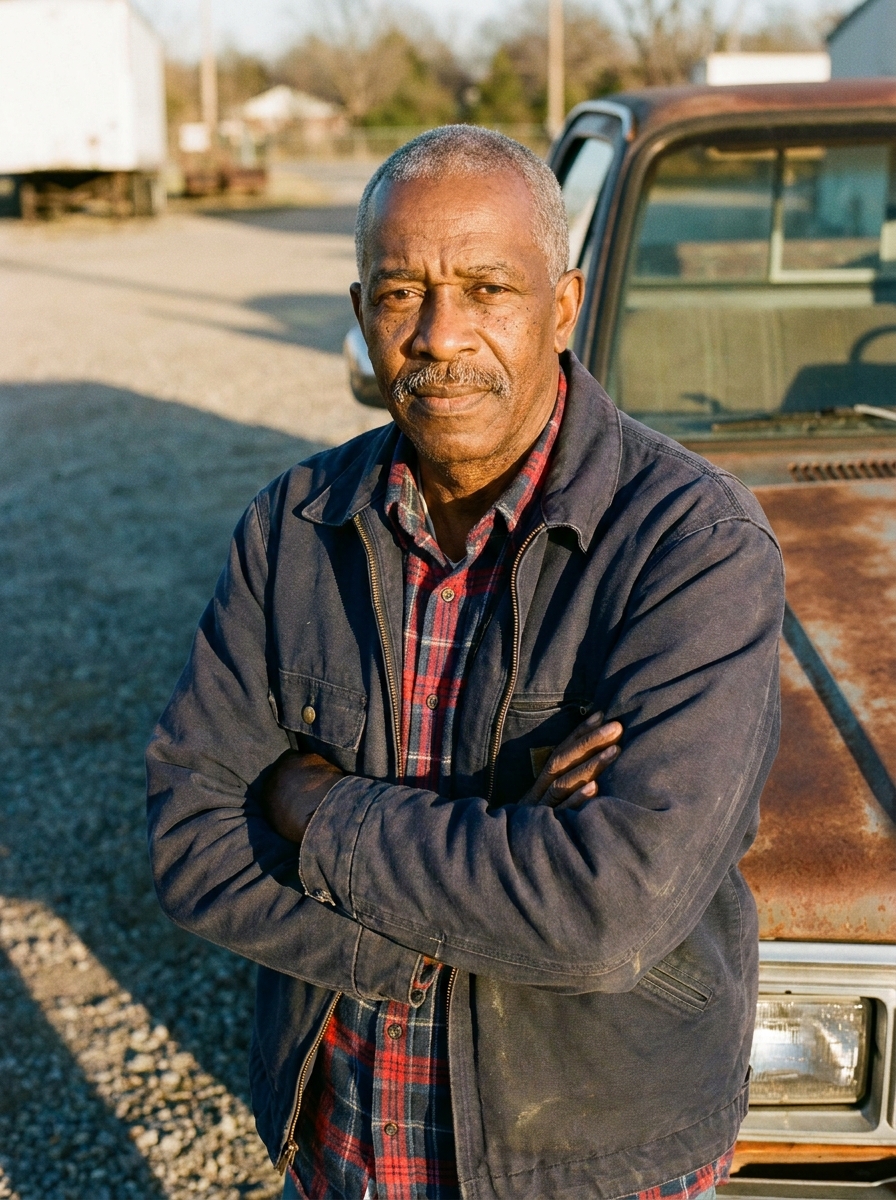
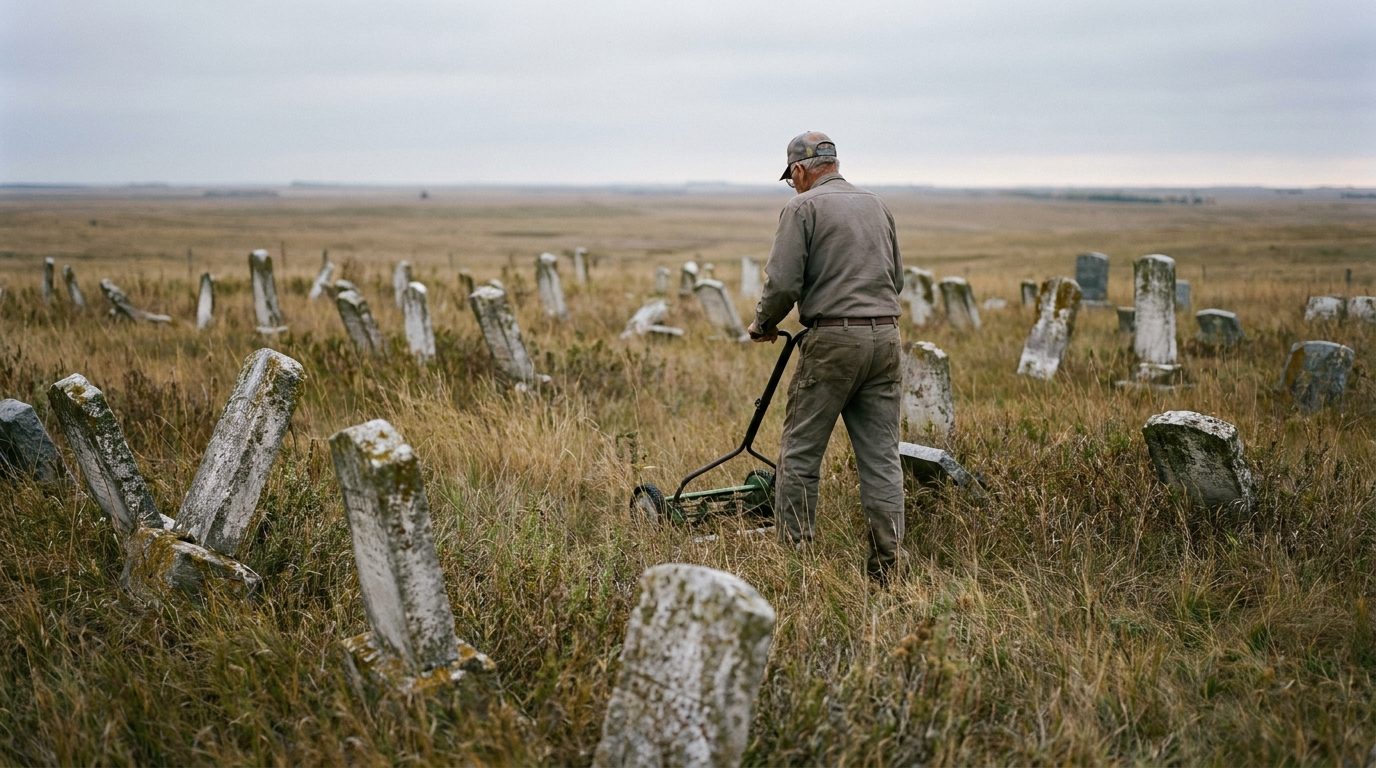
They are in their sixties, seventies and eighties. They have time, they have a pickup and a mower, and a good number of them have an ancestor in the ground they are cutting.
Some work through county historical societies or genealogical societies. Some are individuals who have simply taken responsibility for a particular plot.
One man I met has mowed the same acre for twenty-two years. It is eleven miles from his house. He has nobody buried there.
What the work involves
Mowing, constantly, through the growing season.
Fence repair, because cattle get in, and cattle knock stones over.
Resetting stones, which is heavier and more technical than it sounds. A marker that has fallen and sunk has to be dug out, a base prepared, and the stone set true. Done badly it damages the stone permanently.
Cleaning, which is where most enthusiastic volunteers do harm. Wire brushes, household cleaners and pressure washers destroy old limestone and marble. The correct method uses water, a soft brush, and a specific biological cleaner made for the purpose, applied and left. Anyone who tells you about bleach should be kept away from the stones.
And documentation. Photographing and recording every marker, transcribing inscriptions while they are still legible, and getting the record somewhere it will survive.
Why the documentation matters most
The stones are going. Limestone weathers, marble dissolves slowly in rain, and a soft stone from 1878 has maybe another few decades of readable surface.
For many of the people buried in these places, the marker is the only surviving record of their existence. No census caught them. No newspaper mentioned them. Infants especially, who appear nowhere else at all.
When the inscription goes, they are gone in a way that is quite final.
So the volunteers photograph everything, transcribe it, and upload it to the online burial databases and to the county society. That work outlasts the mowing.
The succession problem
The same problem as everywhere else in rural America.
The man who has mowed for twenty-two years is seventy-nine. He does not have a successor and he raised it before I asked.
Several of the groups I spoke to have lost cemeteries in the last decade, not to development but to nobody being left to cut the grass. Two seasons unmown and a prairie cemetery is gone into brush, and a few years after that you cannot find the stones.
If you want to help
Contact the county historical or genealogical society. They know which sites are unmaintained and who to ask about access.
Do not clean a stone until somebody has shown you how.
Photograph before you do anything else, in case something goes wrong.
And check whether the site is already recorded in the online databases. Transcription can be done at a keyboard, by somebody who cannot swing a mower, which widens the pool of people who can contribute considerably.