How a Wisconsin towing operator handles the aftermath of a highway crash
By the time the tow truck arrives, the ambulance has usually gone. What is left is a piece of road that has to be returned to use, and a vehicle that has to be removed from it, and somebody has to do that within a few feet of traffic moving at seventy.
I spent an evening with an operator who has been doing it for twenty-two years.
The call
It comes from a rotation list. Most law enforcement agencies maintain one, and companies that meet the equipment and insurance requirements get calls in turn.
He is given a location and very little else. Sometimes a vehicle type. Rarely anything about what he will find.
He said the not knowing is the part that does not get easier.
Arrival
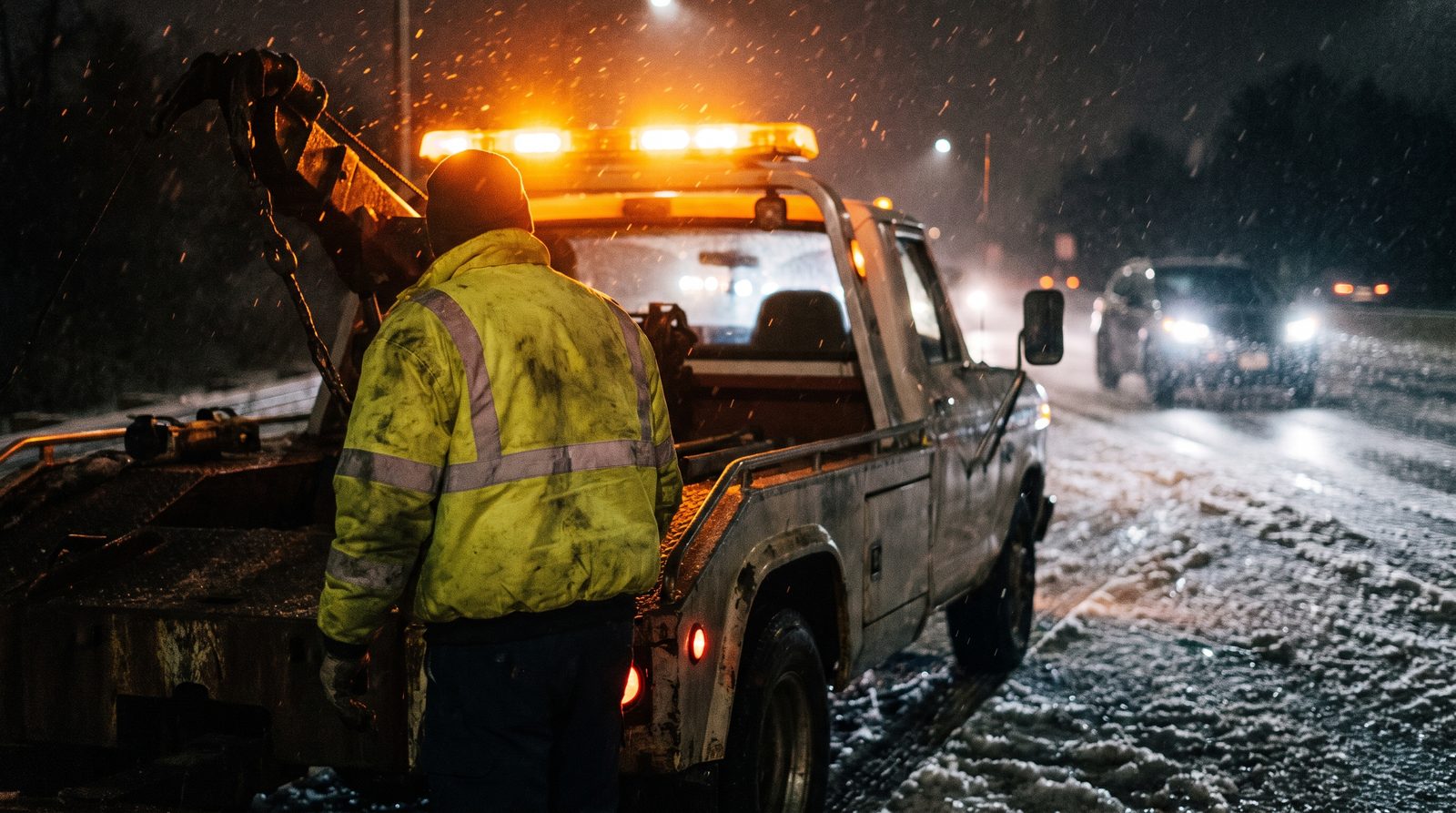
The first thing is position. He places the truck to create a barrier between himself and oncoming traffic, offset, with the lights arranged to give drivers as much warning as possible.
That positioning is deliberate and it is the difference between a working scene and a fatality. Struck by vehicle is the leading way people in his trade are killed, and he has had two close calls he was willing to describe.
Move over laws exist in every state, requiring drivers to change lanes or slow for stopped emergency and service vehicles. Compliance, in his account, is poor and has not improved.
Working with the scene
Law enforcement controls the scene. Nothing moves until they release it, and if the crash involves a fatality or a serious injury, that can be hours while a reconstruction team does its work.
He waits. He described waiting four hours on a winter night beside a closed interstate, with the engine running for heat, which is an ordinary occurrence.
Once released, the priority is reopening the road, and that priority sits in tension with careful work. Everyone at the scene feels the pressure of the traffic behind them.
The recovery itself
Moving a wrecked car is not towing. It is a rigging problem.
The vehicle may be on its roof, down an embankment, against a barrier, or intertwined with another vehicle. It has no steering, no brakes, and frequently no wheels that turn.
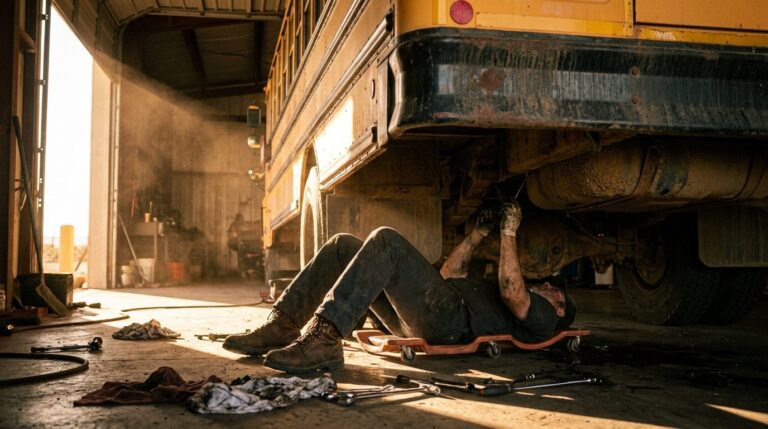
He carries winches, snatch blocks, chains, straps and skates, and the job is working out the sequence that moves the mass without damaging the road, the barrier, or anybody standing nearby. A loaded winch line under tension is dangerous in a way that is hard to convey.
Modern vehicles add a specific problem. Electric and hybrid vehicles involved in a crash can have damaged battery packs, which can reignite hours or days later. There are protocols now for isolating and storing them, including a required standoff distance in the yard, and he has had to build that into how he operates.
The fluids
Fuel, oil, coolant and battery acid on a road surface. He carries absorbent and he deals with the immediate spill.
A significant release goes to the state environmental agency and to a specialist contractor. Getting that judgement wrong is a serious matter.
The debris
Glass and plastic across two lanes, and he sweeps it, because nobody else is going to.
Then the personal property, and this is the part he talked about most.
A crashed car contains somebody's things. Phone, wallet, work boots, a child's car seat, shopping. He inventories it and it goes with the vehicle to the yard, where the family collects it, sometimes the following week.
He said he handles a car seat differently from everything else and would not elaborate.
Afterwards
The vehicle goes to a secure yard and there is storage billing, which is a common source of conflict with owners and insurers and which is regulated differently in every state.
Then the paperwork: the release, the notification, the lien process if nobody collects.
And then the next call.
What he wanted said
One thing, and he said it twice.
Move over. Change lanes if you can, slow down if you cannot. He has a family and he is standing in the dark next to your lane because somebody has to be.
That is not a public service announcement I have been asked to write. It is the only thing a man who has done this for twenty-two years wanted to add.