
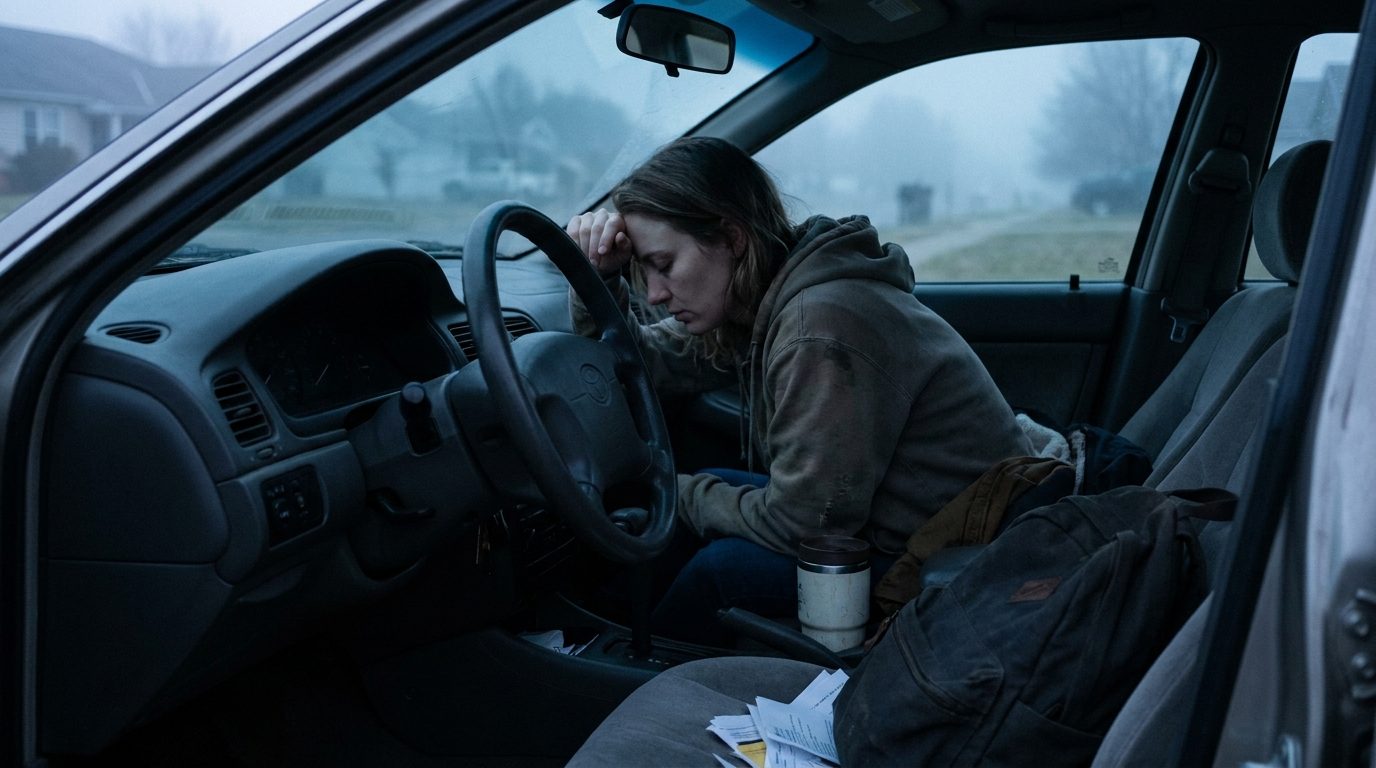
The community college students balancing night shifts with daytime classes
I teach an introductory journalism course at a community college, at eight in the morning, which means I have spent several years watching people try to stay awake who had every right to be asleep.
A substantial share of community college students work, and a meaningful number of them work overnight.
Who they are
Warehouse, mostly, around here. Distribution centres running through the night, and the shift premium is real money.
Then hospital support staff, security, hotel front desk, overnight stocking at supermarkets, food production.
They are older than the stereotype of a college student. Many have children. A good number are supporting parents or siblings.
The arithmetic they are doing is straightforward and brutal: the overnight shift pays more and it is the only shift that does not collide with classes.
What the schedule actually looks like
One student last year finished at six in the morning, drove twenty minutes, attended two classes, slept from one until five, collected a child, and left for work at half past nine at night.
That was not an unusual case. It was a slightly organised version of a common one.
Sleep is the variable that absorbs everything. When something goes wrong, a sick child, a shift extended, a car problem, it comes out of sleep, because everything else is fixed.
What it does to the work
The obvious things. Falling asleep in class, which I have stopped treating as disrespect. Missed deadlines. Absence clustered around the end of a pay period, when shifts get added.
The less obvious thing, and the one I find harder, is that these students are frequently capable of far better work than they produce, and they know it. That gap is demoralising in a way that failing outright is not.
Attrition is the real cost. They do not usually fail. They withdraw, or they stop enrolling, and the intention is always to come back next semester.
What actually helps
Flexible deadlines, within limits. I give a fixed number of late passes per term, no explanation required, no penalty. Removing the need to explain is most of the benefit, because explaining is itself a cost and some students will not do it.
Recorded lectures. Not as a replacement for attendance but as a safety net for the week when it collapses.
Not scheduling group work outside class hours. This is the one faculty get wrong most often. A group project requiring students to meet in the evening is impossible for anyone working nights and it is invisible to everyone else.
Predictability. Publishing the whole term's deadlines on day one so people can plan shifts around them.
What helps more than anything I do
Employer scheduling. A student whose shifts are posted three weeks in advance can build a life. A student on a schedule posted on Thursday for the following week cannot.
Some states and cities have passed predictive scheduling laws requiring advance notice. Where they exist, they make a measurable difference to whether this is possible at all.
Childcare, which is the other hard constraint and which overnight work makes nearly impossible, because almost nothing is open.
What the students say
I asked a class once, anonymously, what they would want faculty to know.
The most common answer was not about deadlines. It was that they did not want to be treated as less serious than the students who did not work.
The second most common was that they wished someone had told them, before they enrolled, how many hours a week the course would actually take, so they could have planned the shifts.
That second one is entirely fixable and almost nobody does it. I now put an honest estimate in the syllabus, and I revised it upward after the first year because my original estimate was optimistic.
What I would say to a student in this position
Tell somebody. Not for sympathy, for scheduling. Most instructors will work with you and cannot if they do not know.
Take fewer classes and finish. Two courses completed beats four attempted, and the degree does not record how long it took.
Find out what the college actually offers. Emergency grants, food assistance, childcare subsidies and laptop loans exist at most community colleges and are consistently underused, because the people who need them are the people with no time to go and find out.