Keeping the lights on at a twenty-four-hour Iowa diner
The stretch between two and five in the morning is a different business from the rest of the day, and the people who run all night places know it is barely a business at all.
I stopped at one outside Des Moines for years. I went back last winter to ask the woman who runs it how it works.
What the overnight actually earns
Almost nothing, and sometimes less than nothing.
She showed me, roughly. Six to eight customers across three hours on a weekday. One cook, one server. The electricity, the gas, the coffee that gets made and thrown away.
On a good night it covers the wages. On a bad night it does not.
So why stay open
Three reasons, and only one of them is sentimental.
The first is that closing and reopening costs money. The grill comes down, gets cleaned, comes back up. You lose the prep advantage for the morning rush. If you are opening at five anyway, the difference between closing at midnight and staying open is smaller than it looks.
The second is the morning. The five o'clock crowd, the farmers and the shift workers, is the profitable part of the day, and they come because the place is always there. She was clear that if she closed overnight some of them would go elsewhere and not come back.
The third is the one she took longest to say. There are people who come in at three in the morning because they have nowhere else.
Who is actually there at three
Truck drivers, fewer now than twenty years ago.
Hospital staff at shift change, and they come in groups and they tip well.
Police, which every all night place will tell you is a considerable benefit and nobody says out loud.
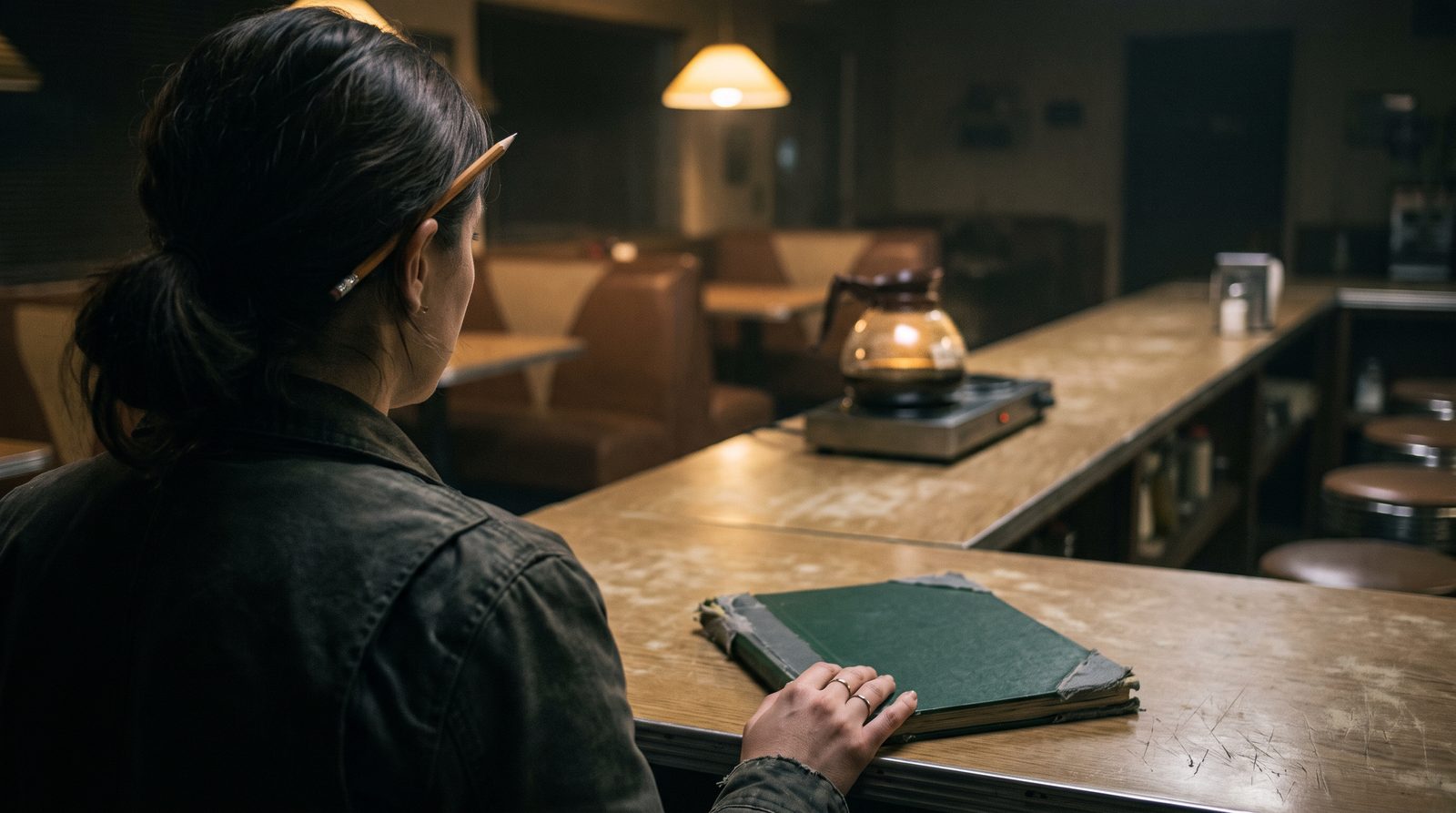
People who cannot sleep. The recently bereaved, the recently divorced, people whose heads will not stop. She said she has three regulars who come in alone, sit at the counter, say very little, and leave after an hour.
And, occasionally, somebody in genuine trouble, and she has called for help more than once.
The staffing problem
This is what actually closes all night diners, not the economics.
You cannot hire for it. The overnight shift has always been hard to fill and it has become much harder. Younger staff will not do it. Older staff cannot do it indefinitely.
She works a good part of it herself, which is not a plan, and she knows that.
The cook who does the rest has been there nineteen years and is sixty-one. When I asked what happens when he stops she changed the subject, which was an answer.
What changed in twenty years
Fewer truckers, because the hours of service rules changed how driving nights work and because the chains took the fuel stops.
More delivery drivers, which is new.
Card payments, which she said cost her real money in fees on small transactions and which she cannot refuse.
And prices. Coffee that was a dollar is not a dollar, and the customers who come at three in the morning are not the customers who absorb a price rise easily.
The part that stayed with me
I asked whether she would open a twenty-four hour place today, starting fresh.
She said no, without hesitating, and then said she would not close this one either, and she was aware those two positions do not fit together.
Then she said something I have thought about since. She said the overnight is not a shift, it is a service, and the place has been open all night since 1974 and she is not going to be the one who stops it.
That is not a business decision. She knows it is not. It is the reason the lights are on, and when she retires they will go off, and the arithmetic will finally be correct.