Why local water wildcatters are drilling deeper in Cochise County
The well that served a house for forty years goes dry in August. The owner calls a driller, the driller comes out, and the conversation is about how much deeper and how much it will cost.
That conversation is happening a great deal in this part of Arizona, and the reason is not mysterious.
What is actually happening underground
Groundwater in the basins here is pumped faster than it is replenished. Recharge in a desert basin is slow, measured over long periods, and pumping is not.
The water table drops. Wells that were adequate at three hundred feet are not adequate at three hundred feet any more.
In parts of the Willcox basin the declines have been substantial enough to produce land subsidence, where the ground surface itself sinks as the aquifer compacts. That shows up as earth fissures, which are cracks that open across fields and roads, and which are visible from the air.
Subsidence is largely permanent. The aquifer's capacity to hold water is reduced and it does not come back when the pumping stops.
Why the regulation is different here
Arizona regulates groundwater tightly inside designated Active Management Areas, which cover the areas around Phoenix, Tucson and a few others. Inside those, there are requirements about metering, about assured water supply for new development, and about pumping.
Much of rural Arizona sits outside them. Outside an active management area, groundwater pumping has historically been governed by a reasonable use doctrine and very little else, with no requirement to meter and no limit on how much a landowner may pump from beneath their own property.
That difference is the single most important fact about water in rural Arizona, and it is why the same state can have strict rules in one county and almost none in the next.
There has been sustained argument about extending management to rural basins. The Willcox basin has been at the centre of that argument, and the legal and political situation has been moving. Anyone acting on this should check the current status rather than relying on what was true a year or two ago.
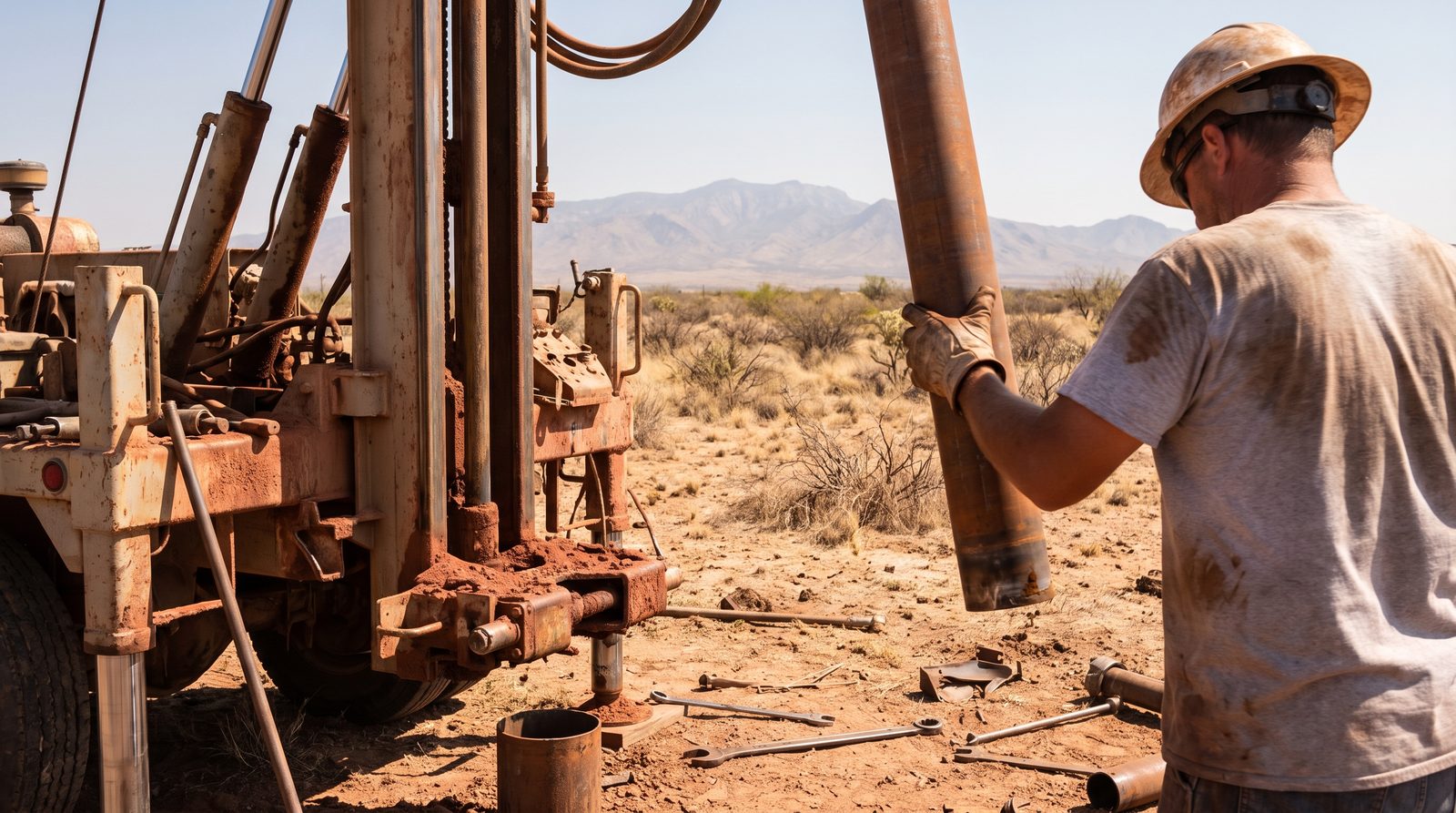
The drilling itself
Deeper wells are not a simple matter of more pipe.
The cost rises with depth, and not linearly. Different rock, different casing requirements, more time.
A deeper well needs a bigger pump, which needs more power, which raises the running cost permanently. A domestic well owner who goes from two hundred to six hundred feet is looking at a meaningfully larger electricity bill for the rest of the time they own the house.
Water quality frequently changes with depth. Deeper water in these basins can carry more dissolved minerals, including arsenic and fluoride at levels that matter. Testing after a deepening is not optional and a great many people skip it.
And the drillers are booked. Wait times in a bad summer run to months, which is a serious problem for a household with no water.
Who loses first
Shallow wells, which means older domestic wells, which means households rather than agricultural operations.
An irrigation well drilled to eight hundred feet with a large pump keeps producing when a domestic well at two hundred and fifty does not. So the first people to run dry are generally not the largest users.
That asymmetry is the source of most of the local conflict, and it is a genuine grievance rather than a misunderstanding.
What a well owner can actually do
Get the well tested and get a static water level measured, so you know where you stand rather than guessing. Many drillers will do this, and the Arizona Department of Water Resources maintains well registry data that is public.
Find out how deep your neighbours are, which sounds informal and is the most useful information available in a rural basin.
Look at storage. A cistern and a slower pumping rate can let a weak well serve a household that a stronger draw would run dry. This is a genuinely underused option.
Check whether your basin has any monitoring or management proceeding under way, and attend it if it does.
And before buying rural property, pay for a well inspection with a flow test. Not a glance at the paperwork, a test. This is the most expensive mistake people make out here and it is entirely avoidable for a few hundred dollars.