Keeping watch with the overnight ham radio operators of Cochise County
At two in the morning there are perhaps six people awake and listening across a county the size of Connecticut, and they are talking to each other on frequencies most people have never heard.
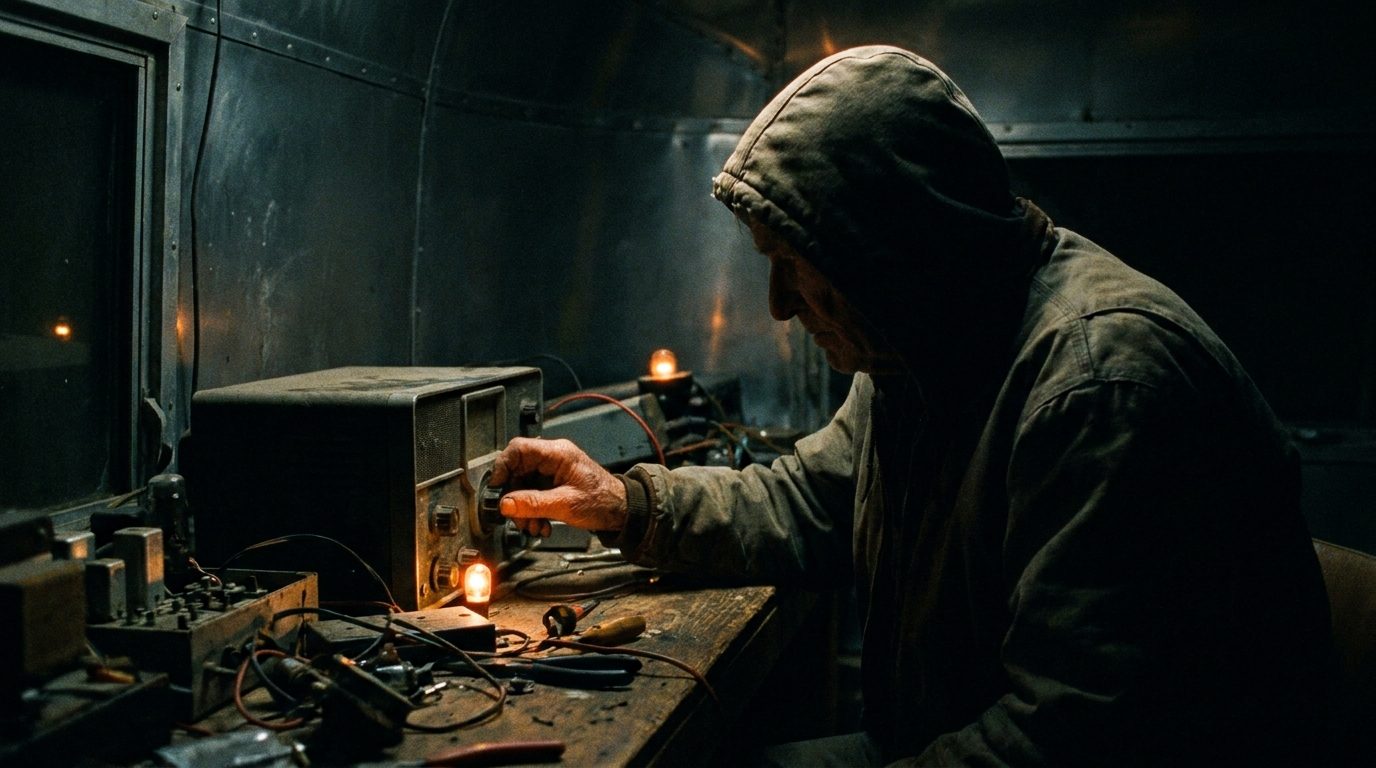
I sat up with one of them for a night in a converted shed behind a house outside Sierra Vista. He made coffee at eleven and again at three.
Why they are there
The honest answer is that most nights nothing happens and they enjoy it.
The formal answer is emergency communications. Amateur radio operators organise into networks that can pass traffic when other systems fail, and in a county with large areas of no cellular coverage, that capability is not theoretical.
When a wildfire takes out a repeater, when the power goes down over a wide area, when a storm saturates the phone network, the radio operators are already on the air and already know each other's call signs and locations.
That last part is the actual value. The equipment is cheap. The organisation is what takes years.
The net
Most nights there is a net, which is a scheduled on air meeting with a controller who calls for check ins.
It sounds like a roll call, because it is one. Each operator gives a call sign, a location, and any traffic they have. The controller logs it.
The point is partly practice and partly presence. If somebody who checks in every night does not check in, that is noticed.
The man I sat with told me about an operator two years ago who missed three nights, which was out of character, and somebody drove out to the property. He had fallen. That is the kind of thing this network catches that nothing else does, because he lived alone with no cellular signal at the house.
What the equipment actually is
Less impressive than people imagine. A radio the size of a large book, a power supply, a length of coaxial cable, and an antenna on a mast outside.
A repeater on high ground takes a weak signal and rebroadcasts it, which is how a handheld radio in a wash can reach somebody sixty miles away. The repeaters are maintained by clubs, mostly by the same small group of people, mostly with their own money.
There is also digital traffic now, and systems that link radio to the internet, which the older operators regard with suspicion and use anyway.
The licensing
You need a licence, granted by the Federal Communications Commission after an examination. The entry level test is multiple choice, the question pool is published, and people pass it after a few weeks of study.
That barrier is lower than most people assume and it filters for exactly one thing, which is whether you cared enough to learn the rules.
Who they are
Retired, mostly. Engineers, a couple of former military communicators, a retired nurse, a man who drove trucks.
They are overwhelmingly men over sixty and every one of them mentioned recruitment without being asked. The hobby has an ageing problem and they know it.
They also, and this is the part that struck me, know a great deal about each other's lives without having met most of them in person. Voices on a frequency for fifteen years.
What happens when it matters
During the larger wildfires in this part of the state, operators have staffed shelters and command posts and passed traffic when other systems were saturated.
Nobody writes about that afterwards, because the story is the fire.
The value is difficult to demonstrate precisely because it only appears when something else has failed, and the rest of the time it looks like retired men talking about antennas at two in the morning.
Which it also is. Both things are true, and the second is what makes the first possible.