Why Tucson mobile home parks are forming cooperatives to buy their land
If you own a mobile home in a park, you own the home and you rent the ground it sits on. That arrangement is the whole story, and it is why residents in a growing number of parks are trying to buy the land underneath themselves.
The trap in the arrangement
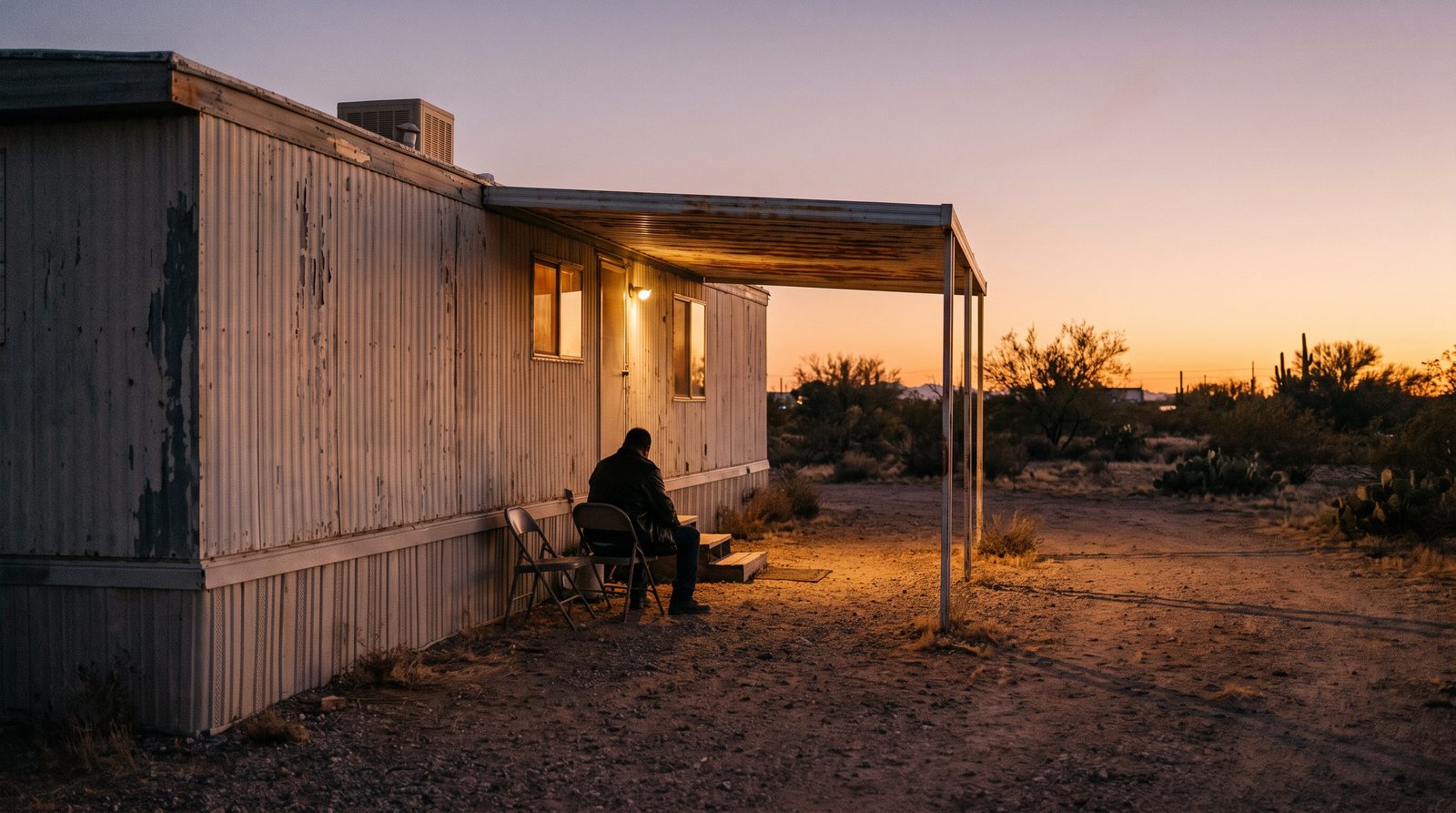
A mobile home is not mobile in any practical sense. Moving one costs thousands of dollars, requires a receiving park with a vacancy, and many older homes will not survive the journey and will not be accepted anywhere.
So when the ground rent rises, the resident cannot leave. The asset they own is physically attached to land somebody else controls.
That is a very unusual position in American housing and it produces predictable results.
What has been happening
Parks have been bought by investors, in Arizona and across the country, specifically because of that dynamic. The business case is straightforward: residents cannot move, so rent can be raised with limited resistance.
Increases of a magnitude that would empty an apartment building do not empty a mobile home park. They just make the residents poorer.
The other outcome is closure. Land near a growing city becomes worth more as something else, the park is sold for redevelopment, and residents are given notice. Relocation assistance exists in Arizona through a state fund, and residents who have been through it will tell you what it covers and what it does not.
The residents in these parks are disproportionately older, disproportionately on fixed incomes, and frequently have most of their net worth in a structure they cannot move.
What a cooperative does
The residents form a corporation. Every household can buy a membership share, usually a modest amount. The corporation borrows and buys the park.
After that the residents collectively own the land. They set their own lot rents at the level needed to service the debt and maintain the place, they elect a board from among themselves, and nobody can sell the ground out from under them.
Lot rents in resident owned communities tend to rise more slowly, for the obvious reason that the people setting them are the people paying them.
How it actually gets done
It requires an opportunity, which usually means the park is for sale and the residents have a chance to match an offer. Some states give residents a right of first refusal or a notice period. Arizona's provisions here have been the subject of ongoing legislative argument.
It requires organisation, which is the hard part. A park with a hundred households and four languages spoken in it has to reach agreement quickly, usually under a deadline.
And it requires financing, which is where national nonprofit organisations come in. There is an established network that provides technical assistance and lending specifically for these conversions, and hundreds of communities across the country have done it.
Why more do not
Time. The window between learning the park is for sale and needing to produce a competitive offer is often very short.
Information. Many residents do not know a cooperative is possible. I have sat in park meetings where the concept was new to most of the room.
Capacity. Organising neighbours is work, and it falls on whoever volunteers, who is usually already doing three other things.
And division. Investors are not obliged to be passive while this is happening.
What to watch for if you live in one
Any notice about a sale, a change of ownership, or a change to the lease. Read it the day it arrives and do not assume somebody else has.
Whether your park has a residents association. If not, forming one before there is a crisis is far easier than forming one during.
Your state's rules on notice periods and rights of first refusal, which are the mechanism that makes any of this possible and which get amended regularly.
What I have seen
I have covered two of these locally. One worked and one did not, and the difference was not money. It was that one park already had an association with a phone list, and the other had six weeks to build one from nothing.
That is the whole lesson, and it is available to anyone before anything has gone wrong.