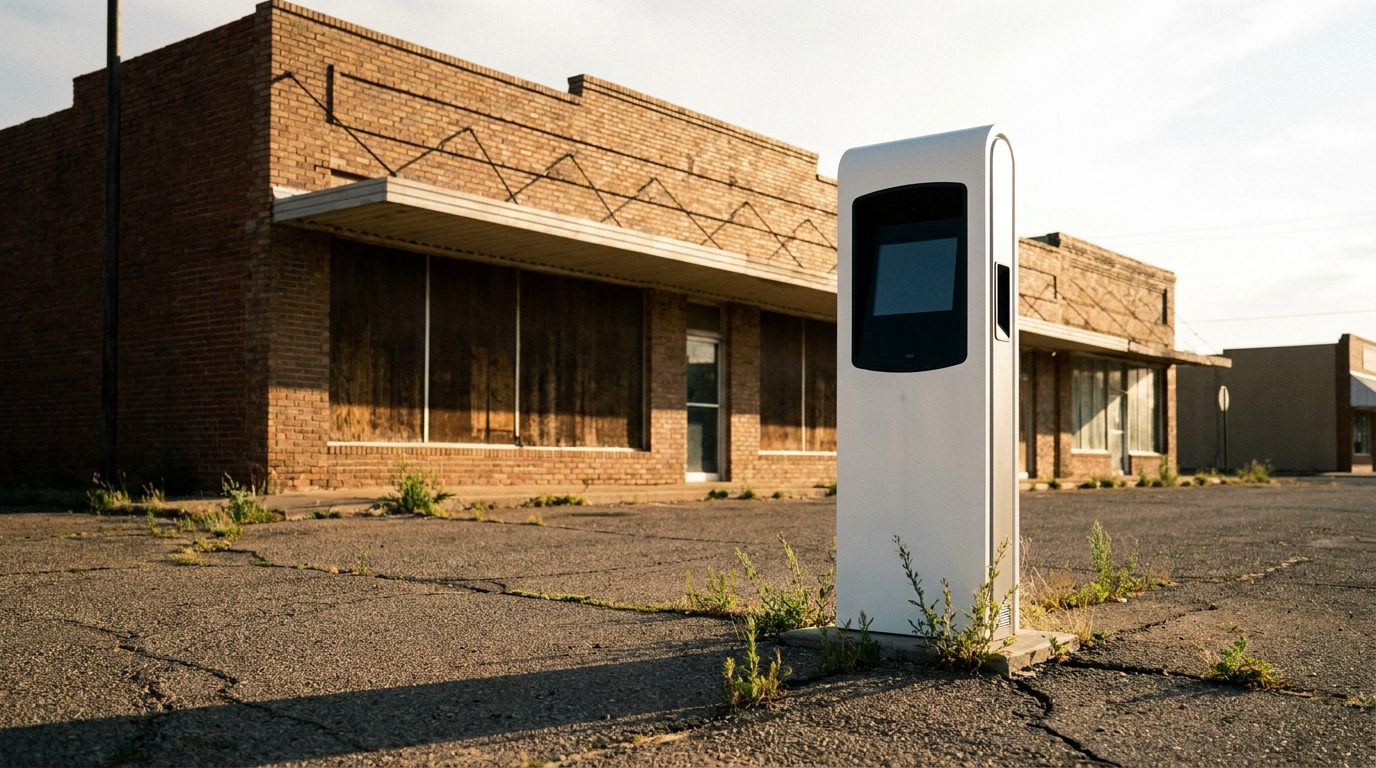
Why small towns along old Route 66 are building electric vehicle chargers
A driver stopping for fuel is there for five minutes. A driver charging a car is there for thirty or forty. That difference is the entire reason these towns are installing chargers, and it has very little to do with anyone's views on electric cars.
The towns in question spent sixty years watching people drive past.
What the interstate did
When the interstate system went in, it bypassed the towns that the old road had run through. The traffic that had supported diners, motels and repair shops moved to a road that did not stop.
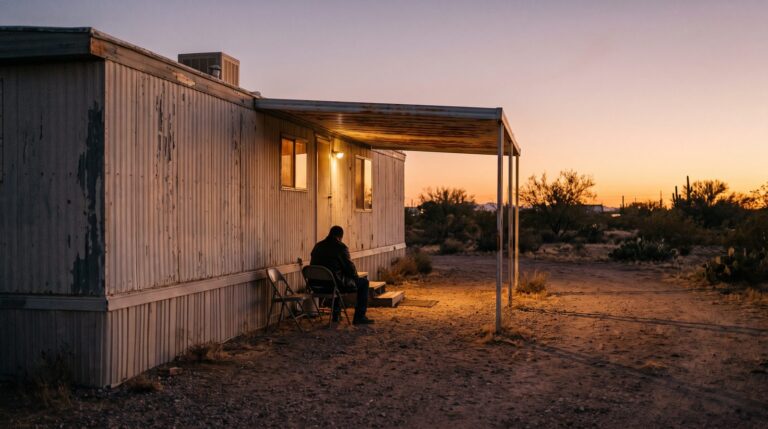
Some towns survived on farming or on being a county seat. Many did not, and if you drive the old alignments you can see exactly what happened: motels with the roofs gone, a main street where nothing is open, a population a third of what it was.
Those towns have been trying to get people to stop again ever since, mostly by selling nostalgia, which works in a limited way and only in summer.
The dwell time argument
Charging is slow. That is a drawback of the technology and, from a small town's point of view, it is an opportunity.
Forty minutes is long enough to eat. It is long enough to walk to a shop. It is much too long to sit in a car in a parking lot.
So the strategy, where it is being done deliberately, is to put the charger downtown rather than at the interchange, so that the captive time is spent on the main street instead of at a franchise by the ramp.
That siting decision is the difference between a charger being an amenity and being an economic development project, and the towns that have thought about it are explicit.
The money
Federal funding has been available through programmes aimed at building out charging along designated corridors, and states have administered it. There has also been utility and private investment.
The grant conditions shape where things go. Corridor programmes generally require chargers within a set distance of a highway and at specified intervals, which is a reasonable rule for building a national network and an awkward one for a town that wants the charger three blocks away.
Municipal leaders navigating that tension is most of what the actual work consists of.
The local politics
Not universally popular, and I have sat in on enough of these meetings to say so plainly.
In a county where people drive diesel pickups and haul stock trailers, electric cars read as somebody else's priority. The objection is partly cultural and partly practical, because none of the local vehicles will use it.
The counterargument that works, when one works, is that the charger is not for residents. It is for travellers with money who are currently not stopping.
The other objection is maintenance, and it is the better one. Grants pay for installation. They do not pay to fix a broken charger in year six, and a broken charger is worse than no charger because it damages the town's reputation on the apps drivers use.
The practical problems
Grid capacity. A fast charger draws a great deal of power and rural distribution systems were not built for it. Transformer upgrades take time and money, and in some places the utility is the actual bottleneck rather than the funding.
Reliability. Charger uptime across the country has been poor enough to be a national complaint, and a town that installs one is taking on an obligation it may not have budgeted for.
Who fixes it. In a town of eight hundred, there is nobody local who can diagnose a charging fault, so it is a service call from a city.
Whether it works
Too early to say honestly, and I am suspicious of anyone who tells you otherwise.
What I can say is that the logic is sound and the same logic worked before. The old road supported those businesses because travel was slow and people had to stop. Making people stop again is at least the right target.
Whether forty minutes of a stranger's time turns into a meal and a purchase depends on whether there is anything worth walking to, which is a question about the town rather than about the charger.