Clocks fell back overnight. Here is why the next few weeks are the riskiest on rural roads
Daylight saving time ended at 2 a.m. today, and clocks across most of the country moved back an hour. The extra hour of sleep is the part people notice. The part that matters on the road is that, starting tomorrow, a lot of evening commutes will happen in the dark.
On rural highways and county roads, that change lands at an especially bad time. It arrives in the middle of the season when deer are most active and most likely to end up in front of a car.
What the numbers show
State Farm, the largest auto insurer in the country, publishes an estimate of animal collision claims each year. Its most recent figures, covering July 2024 through June 2025, estimated about 1.7 million claims nationwide, and more than 1.1 million of them involved deer.
The timing is not spread evenly. October, November and December together accounted for about 650,000 of those claims, roughly 41 percent of the year’s total.
The national odds of a driver being involved in an animal collision were about 1 in 139. In some states the odds are far higher. West Virginia topped the list at 1 in 40, followed by Montana, Wisconsin, Michigan and Pennsylvania.
Why fall is different
Late autumn is breeding season for white-tailed deer, and bucks in particular travel more and pay less attention to traffic. Harvested fields and hunting season also push deer to move around more than they do in summer.
Deer are most active around dawn and dusk. When the clocks change, the evening drive home suddenly overlaps with that window, and drivers who had been commuting in daylight are now doing it in low light, when an animal at the edge of the road is hardest to see.
How to lower the risk
Most of the advice is simple, and the most important piece runs against instinct.
- Brake, do not swerve. Many of the worst crashes happen when a driver jerks the wheel to avoid a deer and ends up in a ditch, a tree or the oncoming lane. Brake firmly, hold the wheel straight and stay in your lane.
- Slow down at dusk and after dark, especially where the road runs between woods and fields or along a creek.
- Use high beams when there is no oncoming traffic. They show the reflection of eyes much sooner.
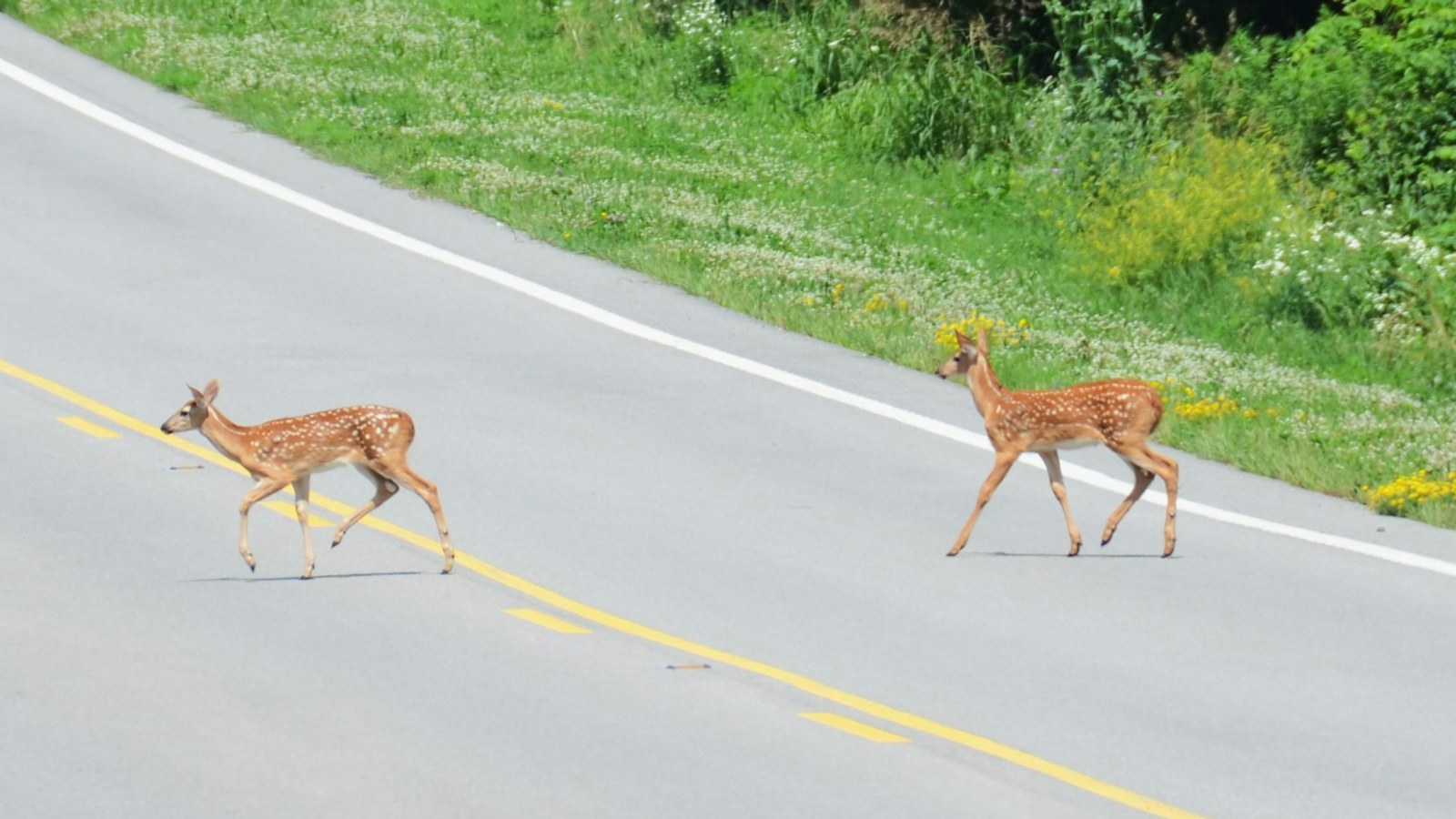
- Expect more than one. Deer often move in small groups. If one crosses, another is likely close behind.
- Take the yellow signs seriously. Deer crossing signs are usually placed where collisions have actually happened.
- Wear your seatbelt, every trip, including the short ones.
If you hit a deer
Pull over somewhere safe, turn on your hazard lights and check whether anyone is hurt. Do not approach an injured animal, which can kick hard enough to cause serious injuries.
Call the police or sheriff if the deer is blocking the road, if anyone is injured or if the vehicle cannot be driven safely. Many states require a report when damage passes a certain amount, so ask the dispatcher what applies where you are.
Take photos of the vehicle and the scene before you move anything, then call your insurer. Collisions with animals are generally covered under the comprehensive part of an auto policy rather than collision coverage, which can make a difference to your deductible.
And check the car carefully before driving on. A deer strike can damage a radiator, a headlight or the hood latch in ways that are not obvious at first glance.
A few weeks of extra care
The risk does not last all winter. It peaks in November and eases as the season goes on. For the next several weeks, though, it is worth leaving a few minutes earlier, driving a little slower after dark and keeping your eyes on the edges of the road as much as the center line.